
Conservation gets a signal boost
Anyone who knows me at least knows my affinity for dolphins–it was my mascot of 12 years for the most meaningful summertime routine of my childhood: swim team. “We are the dolphins, the mighty, mighty dolphins! Everywhere we go, people wanna know who we are so we tell them: we are the dolphins and couldn’t be much prouder; if you cannot hear us, we’ll shout it a little bit louder…” and so on and so forth ad hoarseness-in-our-voice-finitum. That whole cheer (and about a dozen others, including a primitive iteration of “Baby Shark”) will be swimming around my brain for the rest of my life.
Well, it turns out that in the aquamarine depths of China’s southwestern externum, endangered dolphins swim around invisible webs of 5G signals, and maybe… it’s for their own good?
Marine machine learning
At the recent AI for Good summit, Chinese research exec Xi Cao describes that this technology has been saving lives of the rare white Chinese dolphin in its semi-urban habitat in Xiamen Bay, which has seen increasing encroachment from maritime industry. New AI systems are taking the place of older, clunkier, more expensive models we would once consider high tech. According to Celia Pizzuto for AI for Good:
…[Traditional] marine monitoring methods in use before this project, such as radar, electro-optical sensors, and the Automatic Identification System (AIS), suffered from high costs and limited efficiency… [with] constraints such as limited range, poor performance in bad weather, and a heavy reliance on AIS equipment.
Ah, the eternal struggle between economic development and not destroying the earth. How does Cao’s project supersede what’s come before?
By partnering up with China Mobile, UN’s small grants programme GEF, and at least eight other partners, the project is well-supported. 5G networking is set up for real-time detection, weather-resilient monitoring, and interference control. This is all managed through a simple dashboard for the stakeholders (Conservation Command Cockpit) so that researchers can quickly visualize and deploy decisions with less staff fatigue. And you thought dolphins were smart!
In practice, mighty, mighty outcomes have played out. Dolphin deaths are down precipitously (97%!). Dolphins feel safe enough to move farther aloft in the bay, expanding their habitat by 60%, which spatial monitoring has been able to keep up with. Patrolling resources have been conserved (50% down). The impact data don’t just save lives, health, and time: Shipping and fishing vessels are also being tracked, adding an economic development perk to a growing urban area in China. Some of my earlier research on AI for Good shows that this type of monitoring can also give a hand in patrolling for human-trafficking in fishing lanes.
The Wake Rocking the Reef
One major objection, of course, is the degree to which AI systems are offsetting whatever gains they can make to the major detriment of the environment. Some AI apologists would claim that AI can solve these problems as quickly as they create them, but I am learning from my own AI-skeptical readings–currently: Unmasking AI by Dr. Joy Buolamwini and Empire of AI by Karen Hao–that humans have to be very intentional about deploying AI for it to create positive outcomes. If it takes the cooperation of ten different organizations to double the population and habitat of a dwindling population of dolphins, we’re facing an upstream battle.
Still, the admittedly peak evil corporations that are funding the energy suck of compute (so glad these verbs have been so simply turned into nouns) have every incentive in the world to make these systems more energy efficient.
Hope is the Thing with Flippers
Even Buolamwini and Hao hold out hope that AI can bring good to human existence, and so do I: AI can not only create an infrastructure of data efficiency so that we can push new policies and priorities forward, but it can also help mine for the resources to make this happen. At AlignIQ, this is what we aim to do with starry-eyed organizations with seemingly decimated resources. Sore must be the storm that could abash that little bird (or cetacean), if you ask the original empress of the excessive emdash, Emily.
Mediated by machines, Cao says we humans can strengthen our “harmonious coexistence” with ecosystems. What can harmony look like when humans mediate it through machines in other contexts? Chiefly, when these powerful machines are watching and listening carefully for patterns, folks have the opportunity to spend more time monitoring and learning from Mother Earth’s wonder, instead of mostly reacting to its destruction. And folks who don’t work in the tiny field of marine conservation (AKA the pinniped police) get to reap more of the benefit, snee–ee–eeaking more of Mother Earth’s wonder into their lives with less chance to take it for granted. We should be so lucky just to be another Chinese fisherman, angling for croaker, watching this happen:
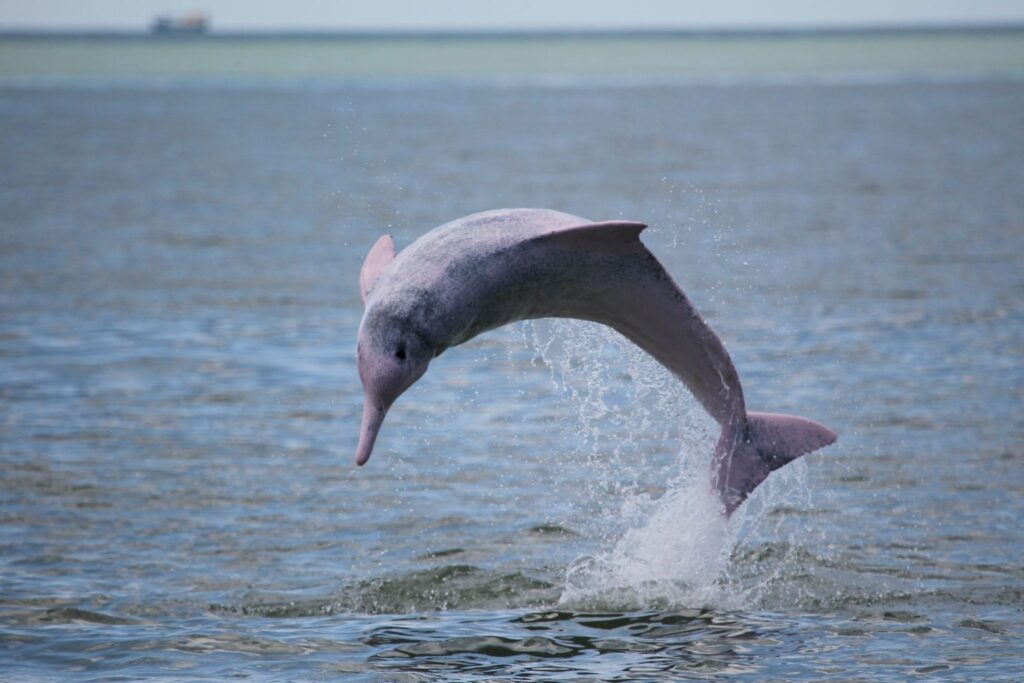
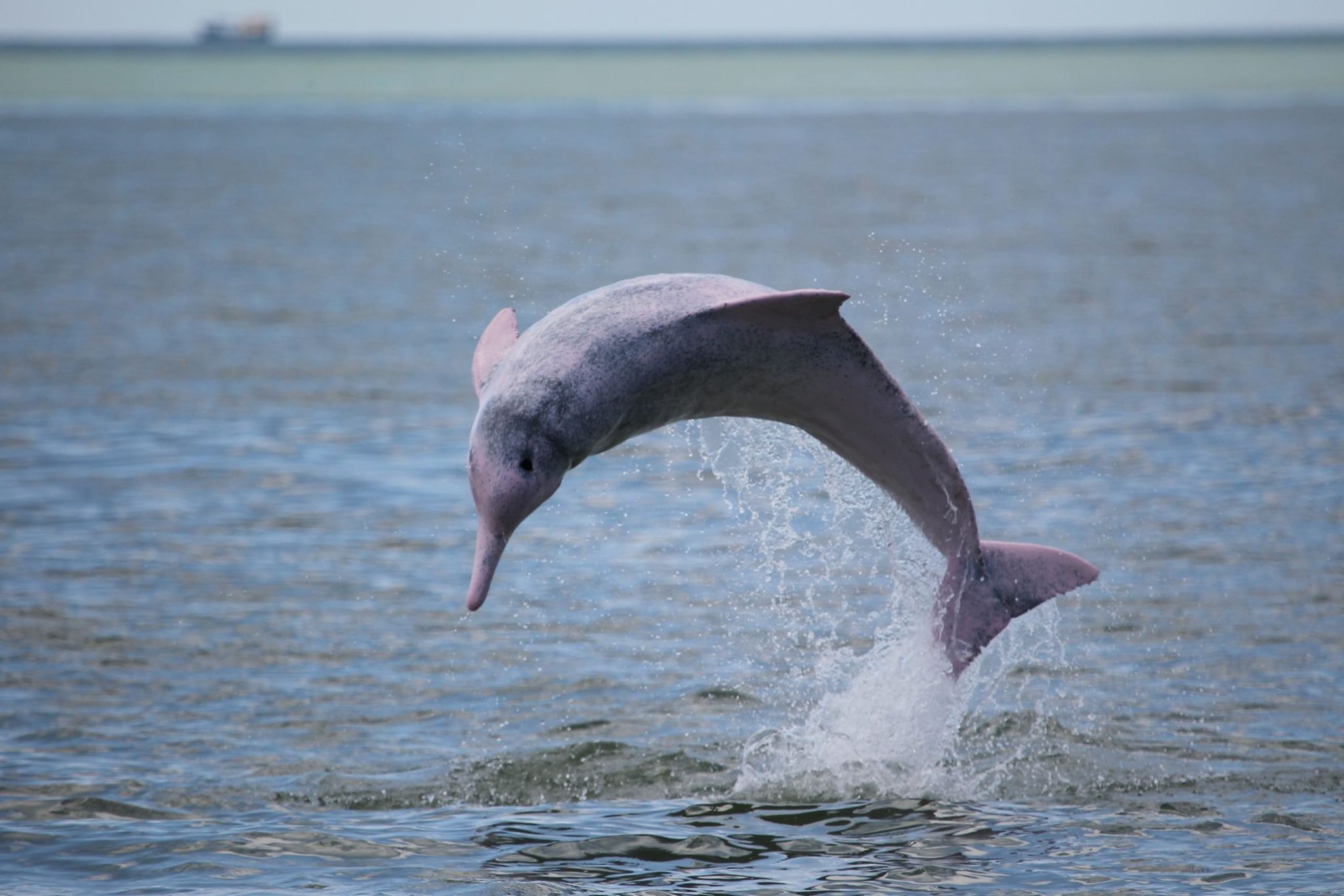
Thirty years ago, I had a Lisa Frank dolphin school folder in hand and Michael Jackson’s best 90s song set in a music video to scenes from Free Willy in my heart. But nothing can beat the fact that these beautiful creatures are coming back to dominate their home waters.
[In this post, we used AI for polish, not porpoise purpose.]
If you’ve ever wanted to see some other examples of AI for Good, check out these posts from the past few months:
If you’ve ever wondered why Caroline loves alliteration so much, and I’m sure you haven’t, it’s because of Simon Armitage’s translation of Sir Gawain and the Green Knight, which did the best job of convincing a continental-Eurocentric comparativist that English language has a valuable literary heritage.
If you need a 90s sugar crash, go here, here, and here. And don’t forget to support the since-renamed Dolphins.