Media Hub
Talks and clips from AlignIQ on responsible AI in mission-driven organizations. Every video has its own page with the key takeaways and a full transcript, so you can skim before you watch.
-
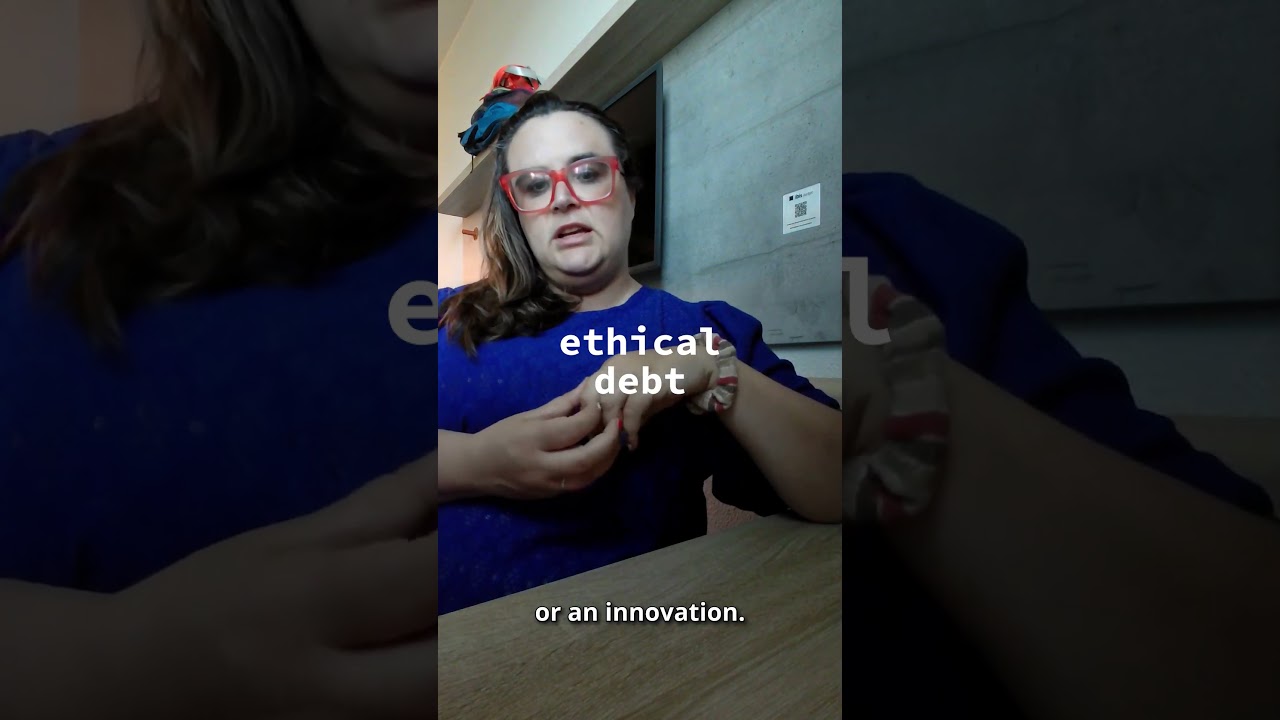
Three AI Ethics Terms Worth Their Weight in Navel-Gazing
Ethical debt, a-ethical AI, and the persistent interlocutor: three terms from an AI ethics researcher that name risks most teams feel but can’t describe.
-

Whose Culture Will AI Carry?
UN ambassadors from the Global South on building AI at home, and why cultural responsiveness worried the room more than data safety.
-

Citizens Can Shape AI, Too
Day one at the AI for Good Global Summit: the digital divide, AI rules that hold up in practice, and what robots still can’t learn from ants.
-
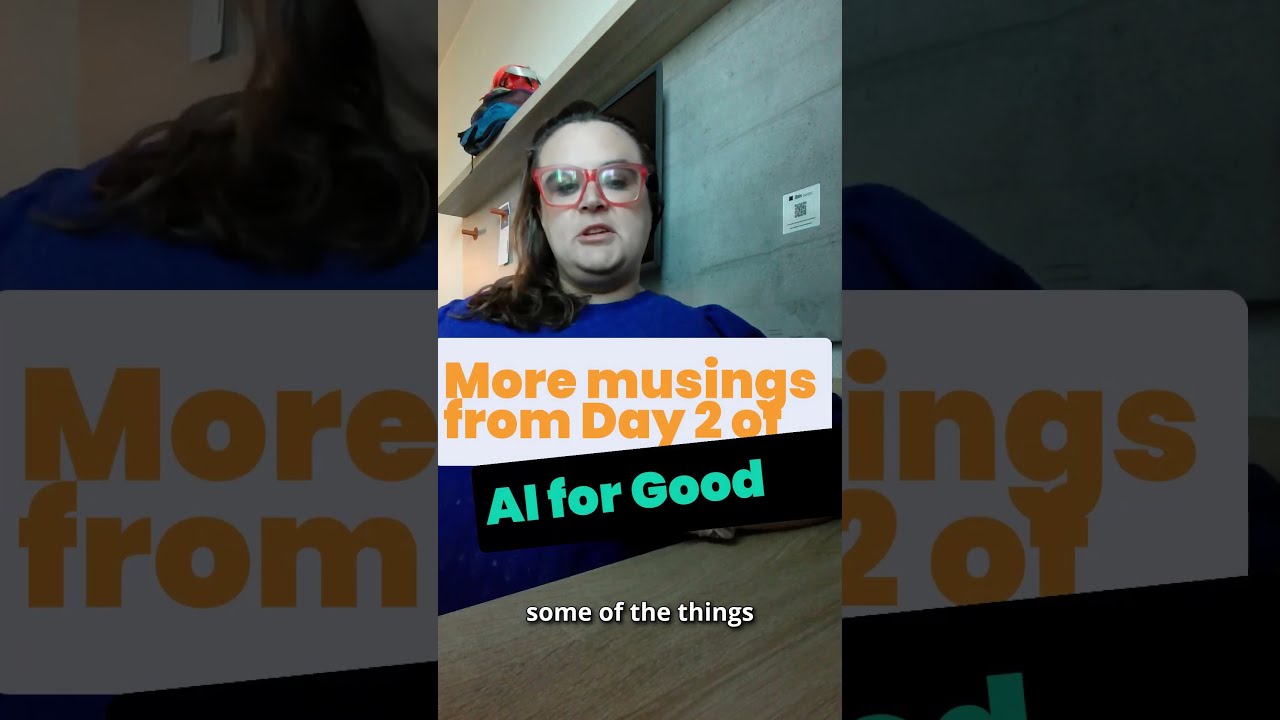
Fund People, Not Just Compute
Why AI adoption stalls without electricity, internet access and trained people, and why frontier AI has to answer to those far from the room.
-

The Unglamorous Work Behind “AI for Good”
Big tech partners bring the logos. Humanitarian workers do the grounding work. A mapping project in Ghana shows why that matters.
-

The AI Time Dividend: Where Should It Go?
A quick way to calculate the time AI saves on one workflow, and a plan so the savings don’t vanish into email and meetings.
-
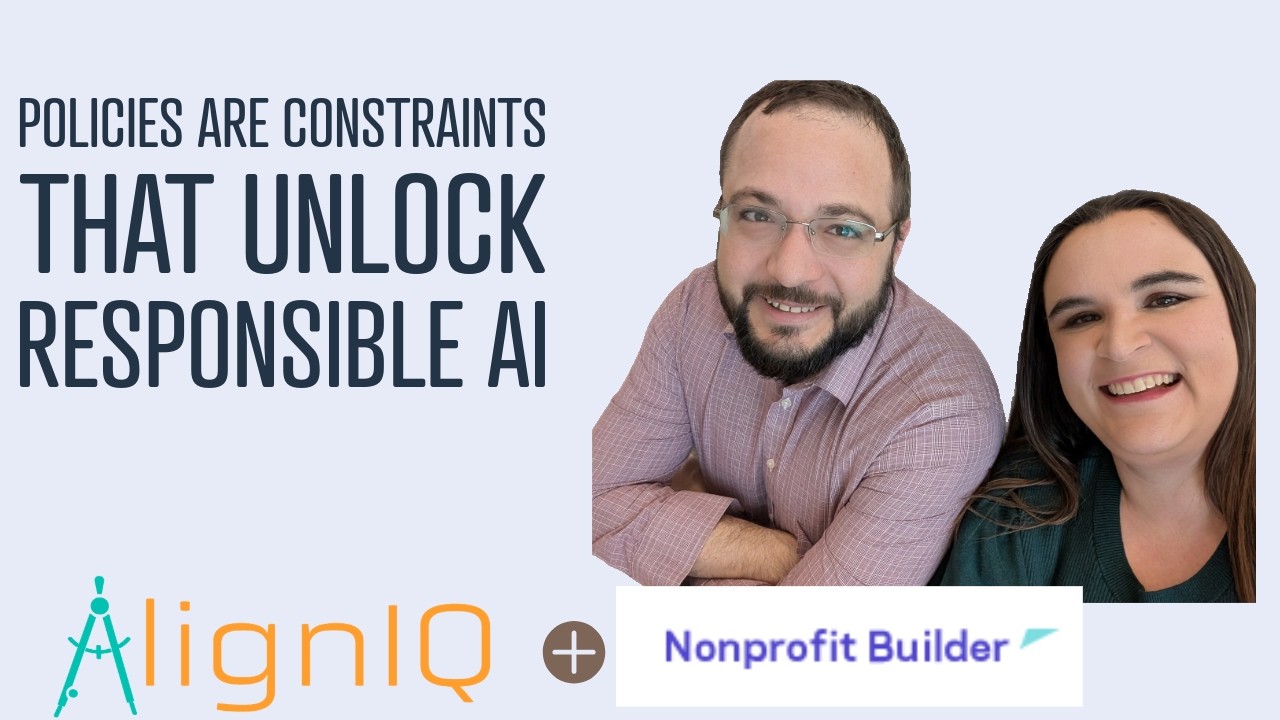
Policies Are Constraints That Unlock Responsible AI
Why an AI policy frees your team to experiment, and how to turn a value into a yes-or-no question you ask before using AI.
-

Turning AI Experiments Into Team Habits
What moves a team forward with AI isn’t a 40-page policy. It’s one honest conversation with a colleague who sees AI differently.
-

AI Is Moving Faster Than Your Guardrails
Staff adoption of AI outpaces governance in most organizations. Governance is how you catch up without slowing people down.
-
AI Replacement Is the Wrong Question
The nearer risk from AI may not be losing jobs but expectations that keep growing for the people who keep them.
-
AI and the End of the Natural Workday Boundary
When you can prompt AI during lunch and between meetings, the natural pauses in the workday disappear. Work norms need to catch up.
-

The Axe Maker’s Gift: Every AI Tool Has a Shadow
An axe lets you build a house or clear a forest. Every new technology brings a downside, and with it the need for new norms.
-

Why AI Makes Work Faster and More Exhausting
Skeleton racers don’t jump straight onto the next track. Why AI-speed work needs intentional pauses to prevent overload.
-

From Information Age to Imagination Age: A Healthcare Lens
If AI takes over healthcare’s information processing, the question becomes what the doctor–patient meeting is for.
-

Efficiency Is the Least Creative Use of AI
If AI frees doctors from data entry, will patients get more time, or will doctors just see twice as many patients? What’s at stake beyond efficiency.
-
Responsible AI Roadmap Webinar: Identifying Safe Data Practices
AI works like an intern on day one: bright, fast, and missing context. Data makes it useful, which is exactly why data needs rules.
-

Responsible AI Roadmap Seminar: Stoplight System
Red means never, amber means mask it first, green means go. A simple way to decide what data belongs in an AI tool.
-

Responsible AI Roadmap Webinar: Responsible AI Policy Language
“We used AI for polish, not purpose.” Three pieces of policy language any small team can adopt this week.
-
Responsible AI Roadmap Webinar: Good Preparation
Well begun is half done. Why AI projects that start with policy and clear practice beat those that start with tools.
-
Responsible AI Roadmap Seminar: The Nonprofit Use Case Moment
Grant prep, reporting, communications and knowledge management: where nonprofits are getting value from AI, and how we start with them.
-
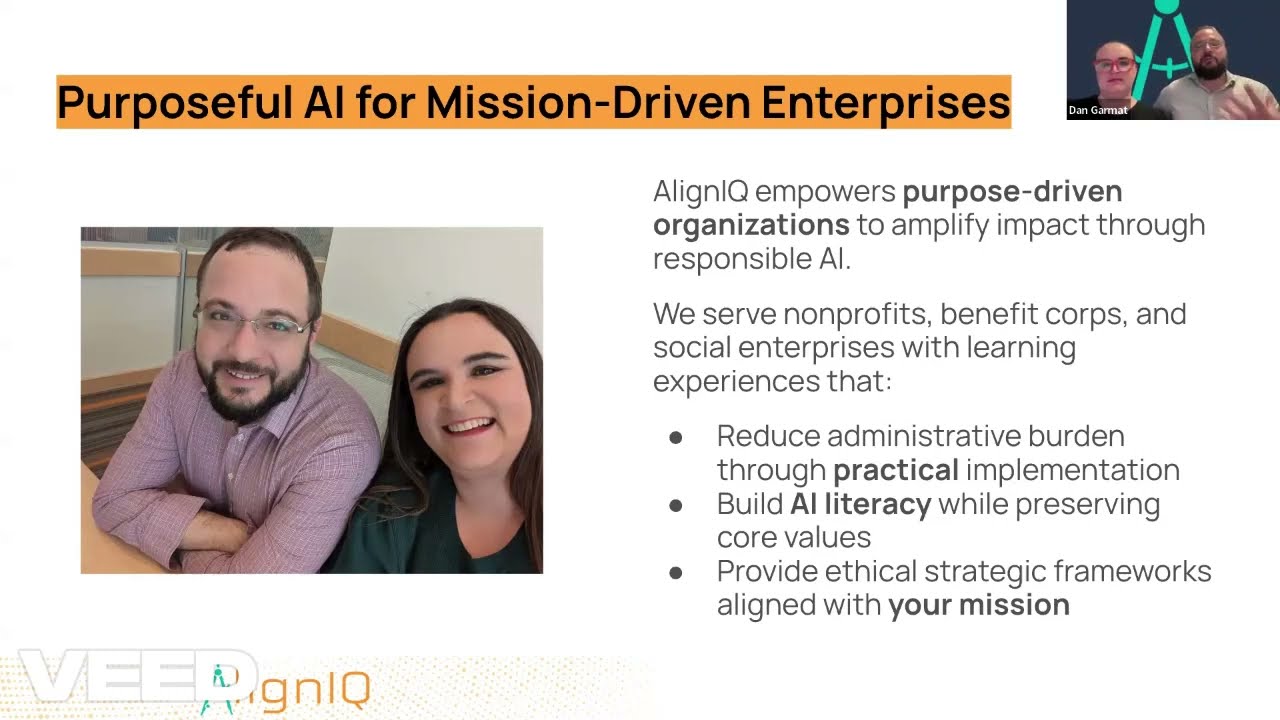
AI Safe Sandbox Webinar, Part 1 (September 2025)
Nine minutes on experimenting with AI safely at work: the four areas of AI risk, which data is safe to share, spotting hallucinations, and keeping trust.
-
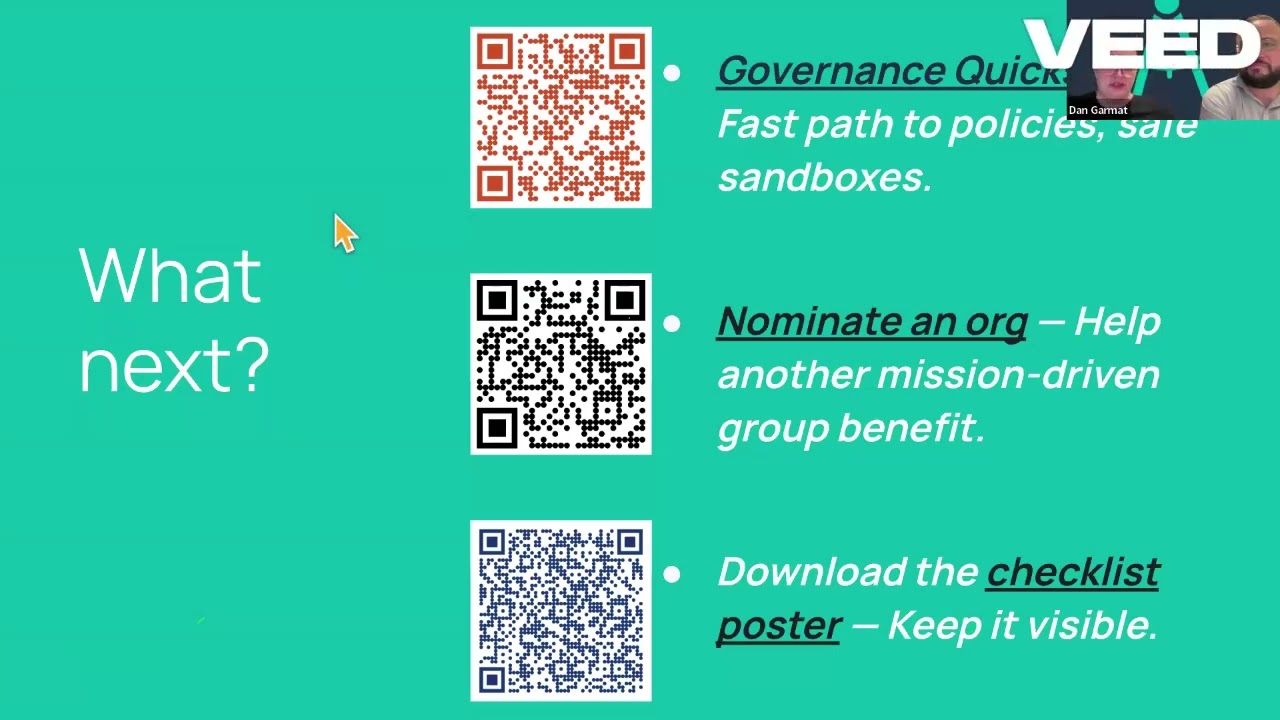
AI Safe Sandbox Webinar, Part 2 (September 2025)
From safe experiments to daily workflows and long-term strategy, plus participant questions on AI search, Google AI Overviews and healthy boundaries.
-
AI Personalization, Search, and Real-Time Support
A live demo: giving an AI assistant your mission, values and brand, then asking it to research a question, and reading the answer like an intern’s report.
-
Aligning AI with Your Mission
If you have a mission, measure AI by more than efficiency: time on high-impact work, deeper reach with stakeholders, and better work.
-
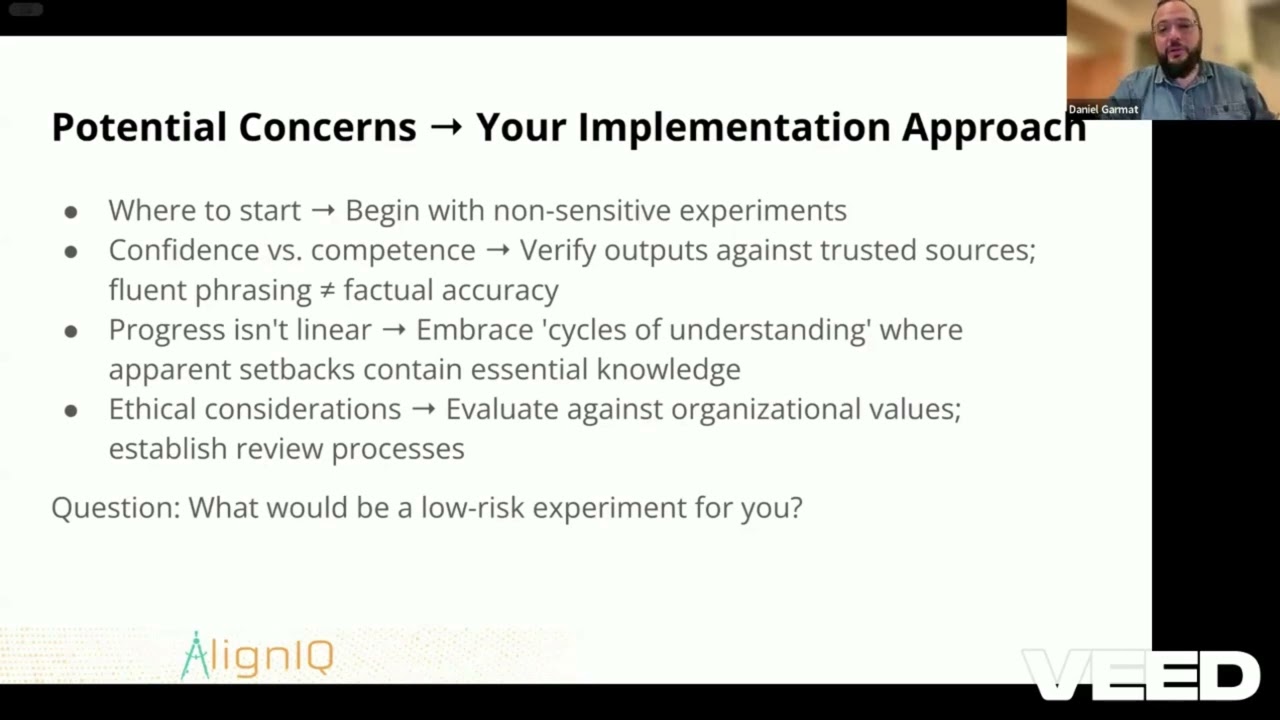
Risk and Reward: Building a Thoughtful Process for Working with AI
Most AI experiments won’t work, and some will feel like getting a calculator. Plus a personal review rule: if it’s your voice, don’t copy and paste.
-
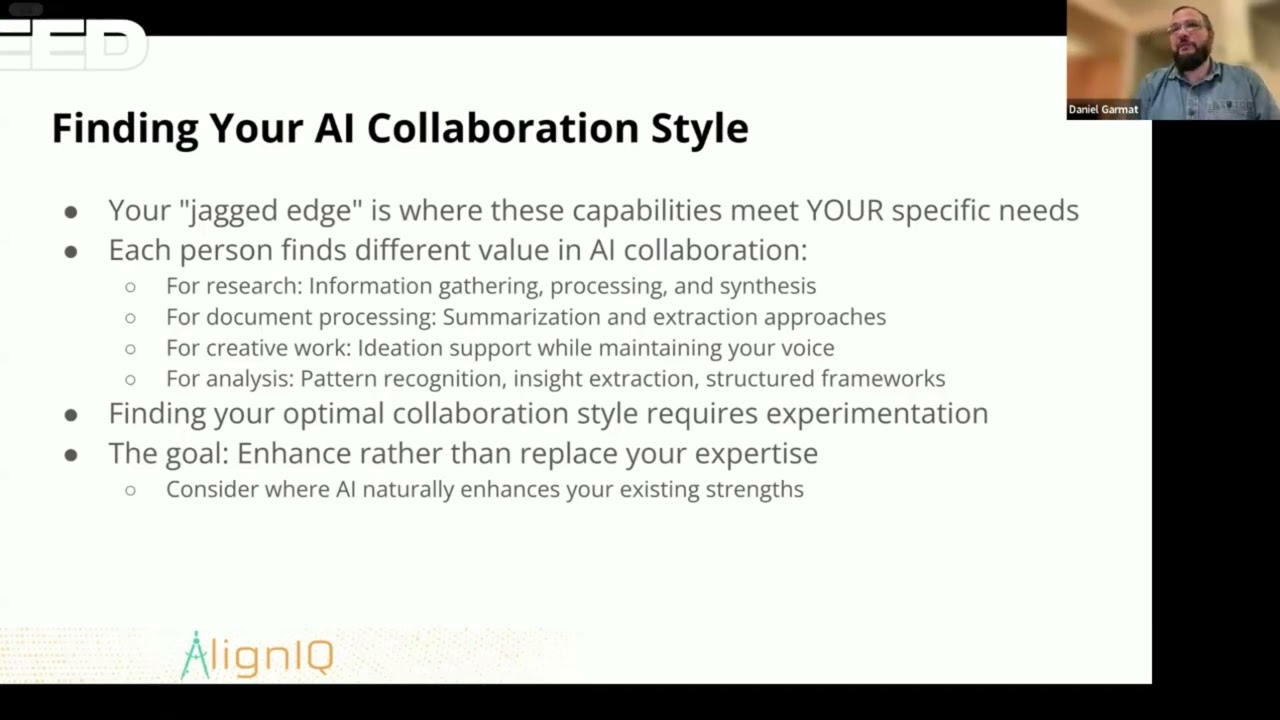
Finding Your Voice with AI: Why Personal Experimentation Matters
Like math homework or learning a song, you only learn what AI can do for you by doing it yourself. And it still needs to be your voice.
-
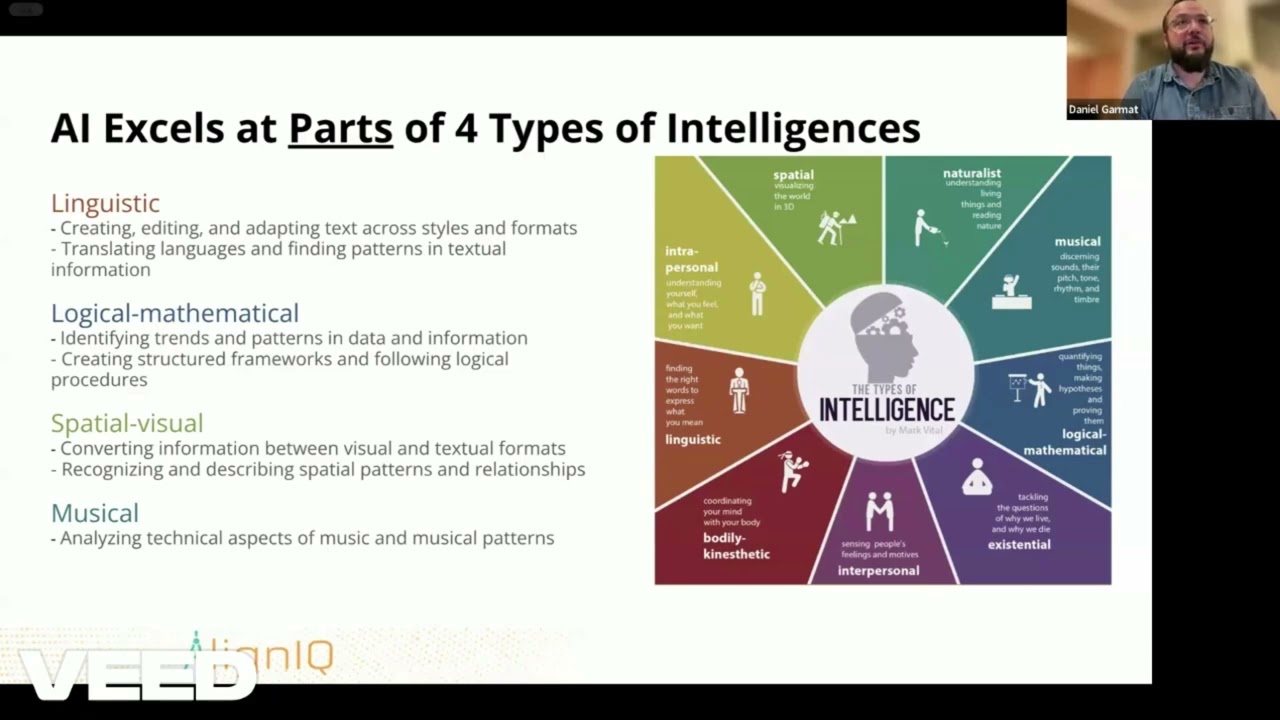
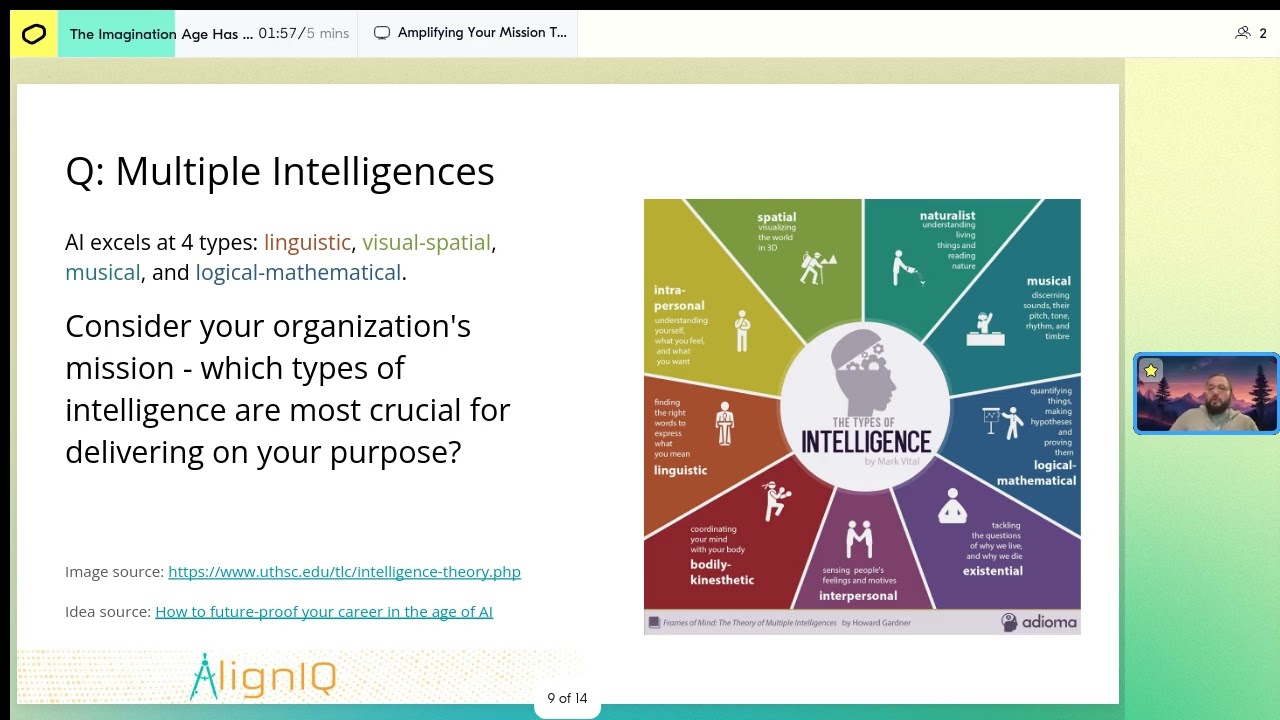
Where AI Excels, Where Humans Lead
AI is strong at parts of linguistic, logical and visual intelligence. It has no perspective, no consciousness, and no lived experience.
-
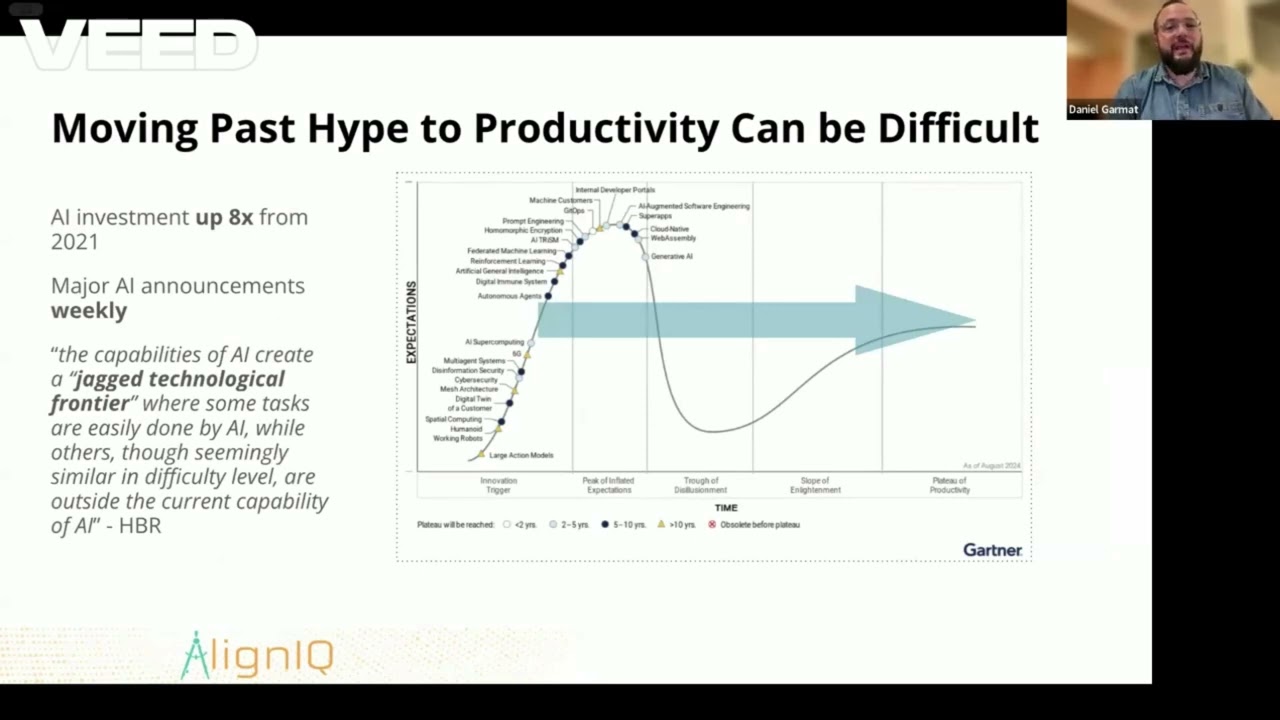
Mapping the Jagged Frontier: Finding Clarity in a Fast-Moving Field
A big AI announcement every week, then hype, then disillusionment. Why AI’s abilities form a jagged frontier, and why that’s hard to keep track of.
-
Why Purpose Matters More in the Age of AI
As AI handles more tasks, work shifts from “can you do this step?” to “why are we doing this, and is it right?”