

Trust, Training, and the Real Work of AI Adoption
by Caroline Stauss
I met Dr. Lutheria Peters the way I meet most people worth talking to: on LinkedIn. Well, technically we had an assist from a dear friend of mine from high school… but anyway, she’s a whole D.C. area hustle vibe, but with academic credentials and work experience with the actual Federal government (not just its subcontractors + other plenipotentiaries).
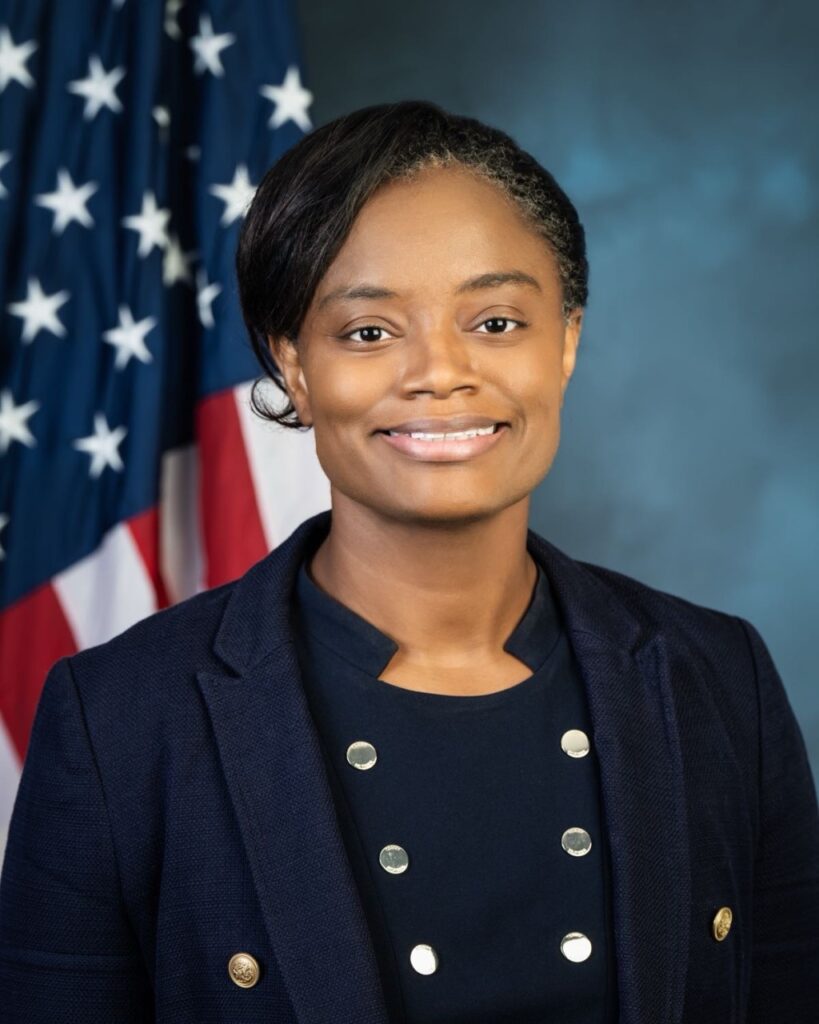
Dr. Peters (familiarly, Dr. Lu) is an internationally certified AI consultant whose practice spans nonprofit membership organizations, academic institutions, and the occasional professional who needs someone to help them go deeper with AI. I sat down with her for a conversation I fully intended to keep to 30 minutes, and which, predictably, went somewhere much better than that. Edited à la fireside-chat-over-Google-Meet format I’ve been playing with here, I endeavored to keep her words intact, if truncated for brevity and shifted around for logic. Bless you, meeting transcription.
Caroline: Is there anything you’d recommend for someone who’s allergic to AI hype—something they haven’t tried yet—to get a real sense of what AI can actually help them with?
Dr. Lu: Essentially, train your AI first. A lot of people are kind of opening it out of the box and they don’t see it more as… that new phone that you just bought that knows nothing about you. Or that new toy that you just bought a child and you have to put the pieces together. Unfortunately [chatbots’] setup doesn’t really guide you to that, [or to prompt engineering].
Maybe they need to put more instructions in the actual chat to say, “Have you configured me yet? Have you trained me yet to know more about you?” Things like customization, security controls, and even some open text boxes to say, “Put your style and tone here,” or, “What do you do?”
And then once you’ve actually read ”the instruction manual,” do some testing—then go back into your settings and refine it, and go back and forth and back and forth until you know you’re not getting “garbage out.”
Caroline: Is there a specific moment where AI meaningfully changed how an organization or a team you worked with actually operated?
Dr. Lu: With the Urban Land Institute of Washington D.C., we’ve been having a decline in membership since we’ve come back from working from home post-COVID. We just didn’t understand how our membership was leaking out. So using some focus groups to better understand the reason for the leaks, the team that I put together essentially came up with the thought of providing a GPT where [stakeholders] could all leverage AI to answer some of the big questions—such as, “What’s a good marketing story we could tell about the recent event that would benefit members?” Or, “What are some of the key themes and next steps we can take with the mentimeter feedback that we got during the session?” Or, how could members use the GPT to plan out their [future] engagement with the organization. The executive director says that he and his staff [use the GPT] every now and then when they get stuck.
American University’s School of Education’s interim dean said, “Yeah, I don’t really know what to do with this AI thing, but I know I want my leadership team to work on it.” [Based on research and what other disciplines at the university were doing,] I found that the education school’s fit would be to help define the ethical use of AI in the education community. I turned that into a proposal, was invited to do a meeting with them, and put together a stepwise process for how they could, over a semester, build out what that strategy would look like.
Caroline: Most of the people I know working in universities see AI as kind of the death of education.
Dr. Lu: Maybe they do. But organizations have very real priorities, and once you start mapping to your priorities, the skepticism kind of minimizes. With intelligent minds you can create a risk register.
Caroline: You talk about starting with trust and context. What does that have to look like before AI enters the picture, as a practitioner?
Dr. Lu: When I started approaching AI, I started approaching it through my network. But with new relationships, what I start talking about is: what are their gaps? What are their needs? What are their priorities? Where are you losing time? What are those repetitive tasks? I’m coming at it more from a practical application. And knowing that if they were to go forward with an AI product, I would set up those guardrails for them and teach them what those guardrails should look like: a recent client showed me how he used AI right now. He did not have “share your chat with everyone” turned off. He didn’t have two-factor authentication. He didn’t have customization, but he’s typing away his prior strategies for his business [into the LLM’s training]. Guardrails are really needed.
Caroline: You talked about turning scattered information into structured insights. What does that process actually look like?
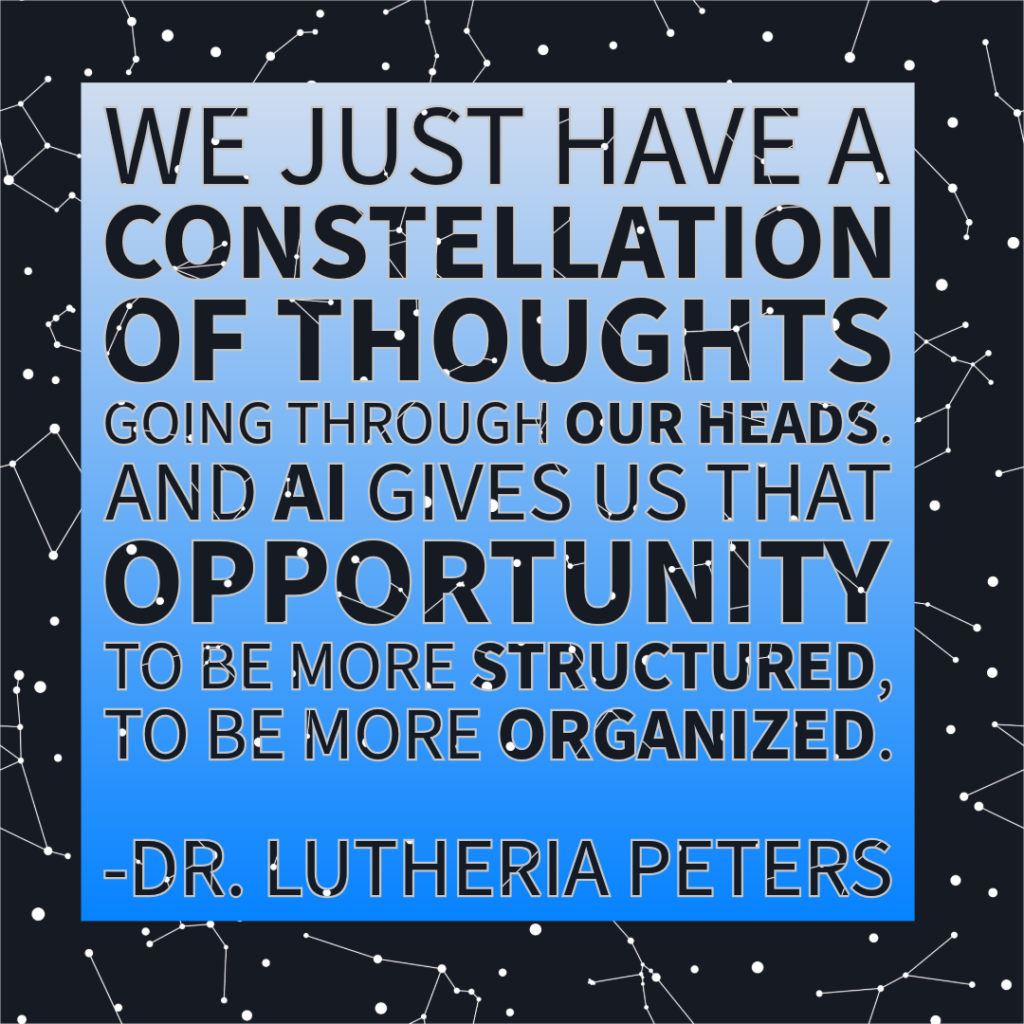
Dr. Lu: Everyone is a human being. And as humans, we just have a constellation of thoughts going through our heads. It’s really just finding out more about clients, their goals, their problem points, and then thinking through what can really help them.
And AI just gives us that opportunity to be more structured, to be more organized. WIth clients, I can talk about a system that can help solve some of those productivity challenges. People are using it already. They just don’t know how to get deeper with it. So I help them get deeper. And while I’m helping them get deeper, I’m helping them also be a little bit more independent with AI tools.
I engage four core AI tools: three of them being different types of LLMs that have different strengths and weaknesses, and then a fourth one that’s really tailored to who they are and how they are. So a good example is one client is a singer. I asked him, “Have you ever cloned your voice?” And that led into talking more deeply about AI settings, configuring his LLMs, and then helping him actually learn more about AI tools for singers.
Caroline: What types of organizations and situations are the best fit for the kind of support you provide?
Dr. Lu: I really focus on people that are really serious rather than merely curious. They’re open to something as different as AI. Not everyone’s comfortable with AI.
Caroline: My organization works with nonprofits and social enterprises primarily, which does tend to be a skeptical group. If a nonprofit leader was just getting started, what would be the first move you’d recommend?
Dr. Lu: I would say they should revisit their logic model, their theory of change. How do they bring about change? And then after they look at their logic model, answer some questions:
- Why do they even exist?
- What are their priorities, goals?
- What are their inputs, their resources, their outputs—immediate, intermediate, long-term?
- What is their impact?
- What are the things that are[in and] out of your control?
- What does life in this organization look like if AI could solve some of the repetitive administrative tasks?
- Where could it actually produce insight that humans never could, and probably never will?
Caroline: Thanks to your advanced studies in data science, You’ve been in this deep for a while now. What’s something that recently surprised you about what AI could do?
Dr. Lu: I like this whole concept of personas, where now, if I feel inadequate in some way, I can build a person to fill that knowledge gap. Or I could build a team member and talk to them and get their advice. I really like that a lot. I could create my own personal counselor.
Now that we’re talking… yeah, I could actually configure a GPT that understands my model of the Cherish Mindset and chat with it to reinforce it. The Cherish Mindset is all about cherishing people and the spaces in them—really stopping to care about others and supporting them. While, of course, supporting yourself too.
Love how Dr. Lu wrapped up with a visible artefact of the Imagination Age, still thinking about what more (not else) AI can do.
At this point, we both had somewhere to be. But I left the conversation with the distinct sense that Dr. Lu and I agree: organizations still approaching AI as a monolith (either a savior or a threat) are missing the real work, which is much smaller, much more methodical, and begins with something as mundane as checking your privacy settings.
Dr. Lu said it best: AI is “moving like a tsunami.” You can escape to high ground, learn how to ride the rather intimidating wave, or basically get inundated. Choose the penultimate!

If Dr. Lu’s framing of the allergic-to-hype crowd has you curious about why AI skepticism runs so deep in the first place, Know, Like, and Distrust: Why AI is So Unlikable makes the case that resistance to AI might be more rational than it looks (and what that means for organizations trying to move forward regardless).
If the question of how leaders actually buy in — not just tolerate — new technology is nagging at you, The Medium is The (Executive) Messenger makes the case that what distinguishes real AI leadership is modeling, rather than policy.
And if the Urban Land Institute case study has you curious about how other mission-driven organizations are actually deploying AI, RAG Time: How Mercy Corps Is Using AI in the Field is one of the more concrete examples we’ve covered.
[In this post, we used AI for polish, not purpose.]